
Absenteeism decreased
TB started treating absenteeism as a leadership signal and addressed team dynamics earlier.
Case
Van Tilburg-Bastianen operates in a high-pressure, highly technical environment across 30+ locations. As the mobility sector shifts and TB becomes more data-driven, leadership needed to evolve too. The focus: stronger one-on-ones, clearer expectations, and a more proactive way of leading that improves culture and results.
TB started treating absenteeism as a leadership signal and addressed team dynamics earlier.
Leaders became more aware of their impact and communication improved across teams.
Less ad hoc firefighting, more reflection, prevention, and follow-through.
Higher efficiency, higher quality, and stronger customer satisfaction as leaders brought out the best in their people.
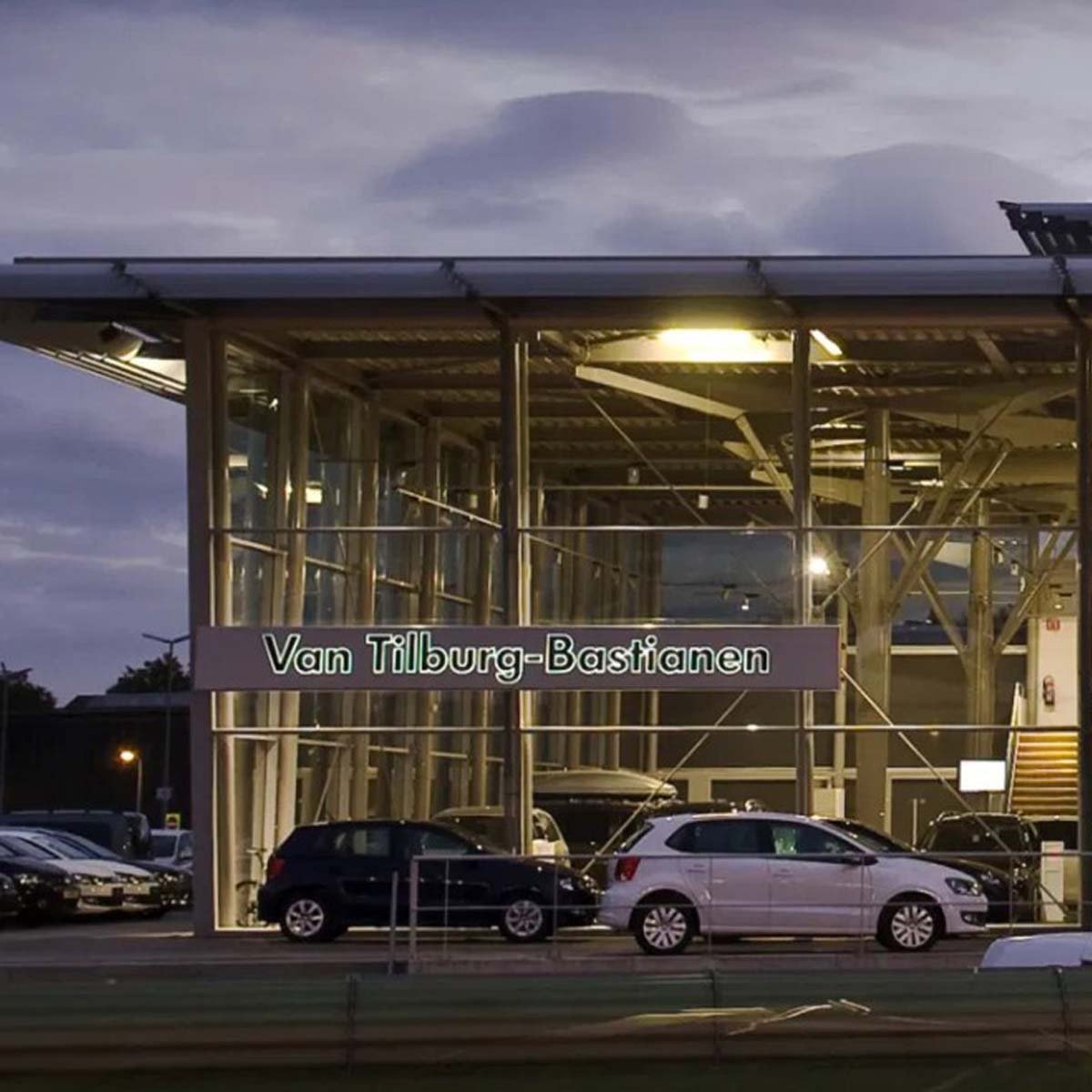
Van Tilburg-Bastianen is a family-owned mobility partner founded in 1934. TB sells and maintains cars and trucks and provides services to transport companies across more than 30 locations in the Netherlands, Germany, and Poland.
Mobility (Automotive and Trucks)
1,000+
30+ locations across the Netherlands, Germany, and Poland
TB operates in a disruptive sector, with new vehicles, changing regulations, and rising expectations from customers. At the same time, TB is building a more data-driven organization, including predictive maintenance to prevent downtime.
The technical side is strong. The leadership challenge was different: define what leadership means at TB and help leaders focus less on the technical work and more on people and customers. Without losing the close-knit culture and technical excellence TB is known for.

The goal was straightforward: make leadership practical, consistent, and strong enough to scale across 30+ locations and three countries.
We started with The 7 Habits of Highly Effective People® to build self-awareness and a common language for effectiveness. Leaders gained a clearer view of how their behavior lands and how that shapes team dynamics.
One question quickly surfaced: what do we actually expect from a manager here? Together, TB and FranklinCovey translated leadership into clear expectations and practical tools, so managers could lead change, develop people, and strengthen relationships consistently across locations.
TB rolled out The 6 Critical Practices for Leading a Team™ as the shared way of leading, supported by the All Access Pass® for reinforcement and continuity. Leaders practiced together across locations (and business lines), creating space to share what works in the real world, not just in the classroom.
TB added deeper focus on leading through change, turning uncertainty into opportunities, and keeping the leadership language alive as the organization expanded into Germany and Poland.
When tension between leaders and team members caused friction, TB started addressing the leadership and relationship side earlier. That shift helped reduce absenteeism and improve collaboration.
Leaders gained one shared language to talk about influence, proactivity, and bringing out potential, making leadership expectations easier to coach and reinforce.
With development captured more consistently, teams experienced more transparency and a healthier feedback rhythm.
TB even received external recognition that their people show up “fresh, open, and proactive,” reinforcing that the culture change is visible beyond HR metrics.
Prefer to scan the full story first? Get the complete case story as a PDF, including context, approach, and outcomes.